



Dry, irritated eyes can make everyday activities such as reading, working on a computer and driving uncomfortable. If your eyes frequently feel gritty, itchy or tired, you may be experiencing Dry Eye Syndrome, a condition that occurs when your eyes do not produce enough tears or when tears evaporate too quickly. According to the TFOS DEWS II Epidemiology Report, reported prevalence estimates for dry eye disease range from approximately 5% to 50%, depending on the population and diagnostic criteria.
Recognising the symptoms early can help prevent ongoing discomfort and identify the right treatment. Consulting an experienced eye specialist can help determine the underlying cause and appropriate treatment. Patients looking for professional eye care can explore the ophthalmology services at Supreme Hospitals.
Common warning signs include:
- Burning, stinging or gritty sensations in the eyes.
- Frequent redness and irritation.
- Blurred vision that improves after blinking.
- Excessive watering despite feeling that your eyes are dry.
Understanding the causes and available treatments can help you make informed decisions about your eye health. For information about the hospital’s healthcare facilities, visit Supreme Hospitals, Chennai.
What Is Dry Eye Syndrome?
Dry Eye Syndrome, also known as dry eye disease, is a common eye condition that develops when the tear film on the surface of your eyes does not provide adequate lubrication. Tears are essential for keeping the eyes comfortable, protecting the cornea and maintaining clear vision.
A healthy tear film contains three important layers: an oily layer, a watery layer and a mucus layer. Each contributes to keeping the eye surface smooth and properly lubricated. When tear production decreases or tears evaporate too quickly, the tear film becomes unstable.
This can result in discomfort, irritation and temporary changes in vision.
Dry eye disease generally develops through two main mechanisms:
Reduced tear production: The lacrimal glands do not produce enough tears to maintain adequate moisture on the eye surface.
Increased tear evaporation: Tears evaporate more quickly than normal, often because of problems with the oily layer of the tear film.
Some people experience both mechanisms simultaneously.
Dry eye can affect people of different age groups, particularly those who spend extended periods using digital devices, wear contact lenses or have certain underlying medical conditions.
An appropriate evaluation by an ophthalmologist can help identify the underlying cause and determine suitable Dry Eye Treatment options.
Common Symptoms of Dry Eye Syndrome
The symptoms of Dry Eye Syndrome can range from mild irritation to persistent discomfort that interferes with daily activities. Some people experience occasional dryness, while others have symptoms that continue throughout the day.
Common symptoms include:
- Burning sensation: Your eyes may feel hot, irritated or uncomfortable.
- Gritty sensation: You may feel as though sand or a small particle is inside your eyes.
- Redness: Insufficient lubrication can contribute to eye surface irritation and redness.
- Blurred vision: Unstable tears can temporarily affect the clarity of your vision.
- Light sensitivity: Bright lights may cause discomfort.
- Excessive watering: Irritated eyes can produce reflex tears, even when the underlying issue is dryness.
- Eye fatigue: Your eyes may feel tired after reading, driving or using digital screens.
When Do Dry Eye Symptoms Become Concerning?
Occasional dryness may improve with simple changes in your environment or daily habits. However, persistent symptoms should not be ignored.
For example, someone who works on a computer throughout the day may notice burning sensations and blurred vision towards the evening. These symptoms could be associated with reduced blinking and tear evaporation.
However, similar symptoms can occur with allergies, infections and other eye conditions. An examination by an Eye Specialist in Chennai can help establish the correct diagnosis.
Seek prompt medical attention for severe eye pain, sudden changes in vision, significant redness or marked light sensitivity.
What Causes Dry Eye Syndrome?
Several factors can contribute to Dry Eye Disease. In some cases, the condition develops because the eyes produce insufficient tears. In others, the tears evaporate before they can adequately lubricate the eye surface.
A U.S. population analysis published by Farrand and colleagues in Ophthalmology (2017) estimated that approximately 16.4 million adults had diagnosed dry eye disease. This figure relates to the U.S. population and should not be interpreted as a Chennai-specific estimate.
Understanding the underlying causes is important because different causes may require different treatment approaches.
Reduced Tear Production
Tear production can decrease because of age-related changes, certain medical conditions and medication use.
Possible contributing factors include:
- Age-related changes in tear production.
- Autoimmune conditions such as Sjögren’s syndrome.
- Certain medications, including some antihistamines and antidepressants.
- Damage or inflammation affecting the tear-producing glands.
- Previous eye surgeries.
People experiencing persistent dryness should consult an Ophthalmologist in Chennai to identify possible underlying factors.
Excessive Tear Evaporation
Sometimes the eyes produce tears, but the tears do not remain on the eye surface long enough to provide adequate lubrication.
One common contributor is meibomian gland dysfunction.
The meibomian glands are located in the eyelids and produce oils that help prevent tears from evaporating too quickly. When these glands become blocked or do not function properly, the oily layer of the tear film may become inadequate.
Other contributing factors include:
- Incomplete or reduced blinking.
- Exposure to air conditioning and fans.
- Windy or dusty environments.
- Long periods of screen use.
- Certain eyelid conditions.
Lifestyle and Environmental Factors
Daily habits and environmental conditions can also contribute to dry eye symptoms.
For example, people working long hours on laptops or mobile phones may blink less frequently when concentrating on the screen. This can increase tear evaporation and cause discomfort.
Other factors include:
- Extended digital screen exposure.
- Wearing contact lenses for prolonged periods.
- Smoking and exposure to smoke.
- Low-humidity environments.
- Inadequate sleep.
- Exposure to dust and air pollution.
Identifying these triggers can help an Eye Doctor in Chennai recommend appropriate preventive measures and treatment.
How Is Dry Eye Syndrome Diagnosed?
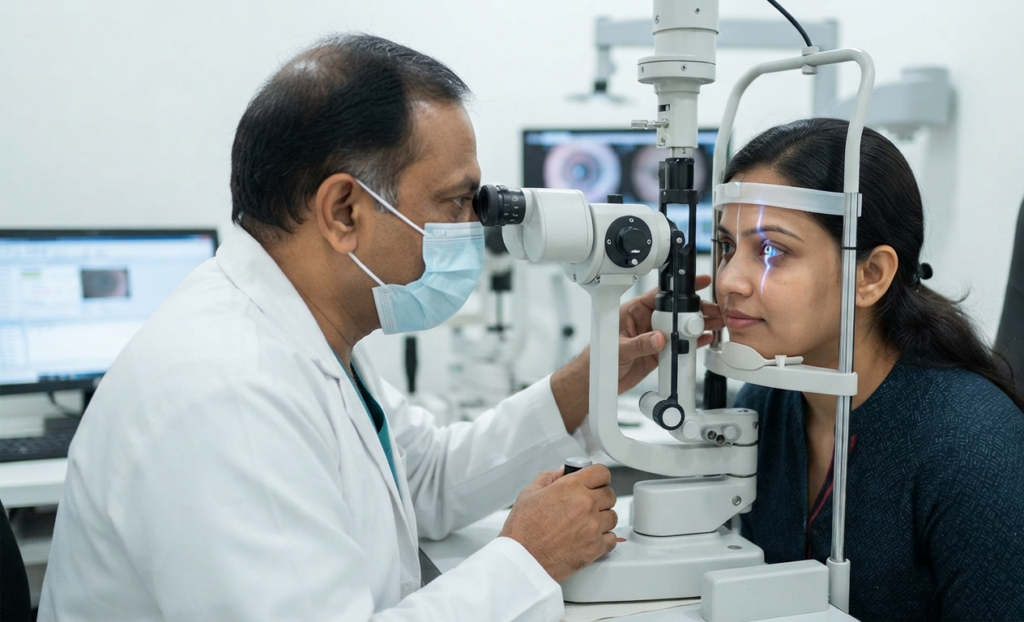
Diagnosing Dry Eye Syndrome involves examining the eyes, understanding the patient’s symptoms and assessing tear film quality.
An ophthalmologist may ask about your medical history, medication use, screen habits and the frequency of your symptoms.
Depending on the examination findings, the following tests may be recommended.
Tear film break-up time test: This assessment helps determine how quickly the tear film becomes unstable after blinking.
Schirmer’s test: A small strip of filter paper is placed near the lower eyelid to measure tear production over a specified period.
Ocular surface examination: The doctor examines the cornea and conjunctiva to identify dryness, irritation or surface damage.
Meibomian gland assessment: The eyelid glands may be examined to identify blockages or problems with oil secretion.
These tests help determine whether the symptoms are associated with reduced tear production, excessive tear evaporation or a combination of both.
A professional Eye Checkup in Chennai can help distinguish dry eye disease from other conditions that may cause similar symptoms.
Dry Eye Treatment Options
The appropriate Dry Eye Treatment depends on the cause, severity and duration of the condition. Treatment generally focuses on improving tear film stability, reducing inflammation where present and maintaining adequate moisture on the eye surface.
An ophthalmologist may recommend one or more treatment approaches.
Eye Drops for Dry Eyes
Artificial tears are commonly used to provide temporary lubrication and reduce discomfort.
They are available in different formulations, including preservative-free options. People who need frequent applications may be advised to consider preservative-free products, depending on their condition.
However, not every eye drop is suitable for every patient.
Some products marketed to reduce redness may not address the underlying dryness. Therefore, consult an ophthalmologist before regularly using Eye Drops for Dry Eyes.
Prescription Medication
When over-the-counter lubricating drops are insufficient, an ophthalmologist may consider prescription medication.
Depending on the diagnosis, treatment may include:
- Prescription eye drops that help manage inflammation.
- Medicines that improve tear production or reduce ocular surface inflammation.
- Treatment for associated eyelid inflammation.
- Other doctor-directed therapies for persistent symptoms.
The suitability of each option depends on the patient’s eye condition and medical history.
Treatment for Meibomian Gland Dysfunction
When dry eye symptoms are associated with blocked or poorly functioning meibomian glands, treatment may focus on improving eyelid gland function.
An ophthalmologist may recommend:
- Warm compresses.
- Appropriate eyelid hygiene.
- Clinician-directed eyelid treatments.
- Management of associated eyelid inflammation.
In selected cases, specialised in-office procedures may be considered after an eye examination.
Advanced Treatment Approaches
People with persistent or severe dry eye disease may require additional treatment.
Depending on the underlying condition, an ophthalmologist may consider options such as:
- Punctal plugs to help retain tears on the eye surface.
- Specialised lubricating preparations.
- Prescription therapies.
- Management of associated ocular surface conditions.
Not every treatment is appropriate for every patient. A proper diagnosis is essential before selecting a treatment plan.
For professional evaluation and guidance about available eye care services, explore the Ophthalmology Department at Supreme Hospitals.
Home Care Tips to Manage Dry Eye Symptoms
Daily habits can play an important role in managing Dry Eye Symptoms. Although home care may not replace medical treatment, certain changes can help reduce irritation and improve eye comfort.
Consider incorporating these habits into your routine:
Follow the 20-20-20 rule: When working on a digital screen, look at an object approximately 20 feet away for 20 seconds every 20 minutes. This encourages regular breaks from near work.
Blink consciously: People often blink less frequently while concentrating on screens. Make an effort to blink fully and regularly.
Adjust your screen position: Keep your computer screen slightly below eye level to reduce the exposed surface of the eye.
Avoid direct airflow: Position air conditioners and fans so that air does not blow directly towards your eyes.
Maintain eyelid hygiene: Follow an ophthalmologist’s recommendations for cleaning your eyelids, particularly when gland dysfunction is present.
Stay hydrated: Drink sufficient water throughout the day and maintain healthy daily habits.
Take contact lens breaks: Follow recommended contact lens cleaning, replacement and wearing instructions.
Remember that home remedies cannot address every cause of dry eye disease. Persistent discomfort requires professional evaluation.
When Should You Consult an Eye Specialist?
Occasional eye dryness may be manageable with lifestyle changes. However, symptoms that continue, frequently return or interfere with daily activities require medical attention.
Consider consulting an Eye Specialist in Chennai if you experience:
- Persistent burning or gritty sensations.
- Frequent redness and irritation.
- Blurred vision that repeatedly returns.
- Discomfort while wearing contact lenses.
- Increased sensitivity to light.
- Symptoms that do not improve with recommended lubricating drops.
Do not delay medical attention if you experience sudden vision loss, severe pain, eye injury or significant changes in vision.
A qualified ophthalmologist can examine your eyes, identify possible causes and recommend an appropriate treatment plan.
Where to Get Eye Care in Chennai?
Choosing the right hospital for an eye examination is important when you experience persistent dryness, irritation or changes in vision.
Patients searching for the Best Eye Hospital in Chennai should consider factors such as the availability of qualified ophthalmologists, diagnostic facilities, treatment options and continuity of care.
Supreme Hospitals, located on Old Mahabalipuram Road (OMR) in Padur, Chennai, provides multispecialty healthcare services, including ophthalmology care.
Patients looking for Dry Eye Treatment in Chennai can explore the hospital’s ophthalmology services to learn about available eye care facilities.
An Ophthalmologist in Chennai can assess symptoms, examine the tear film and recommend suitable treatment based on individual clinical findings.
When choosing the Best Ophthalmologist in Chennai, consider the doctor’s qualifications, clinical experience and the hospital’s ability to support diagnosis and follow-up care.
Whether you are experiencing occasional irritation or persistent dry eye symptoms, scheduling an appropriate eye examination can help you understand your condition and available treatment options.
Frequently Asked Questions About Dry Eye Syndrome
What is Dry Eye Syndrome?
Dry Eye Syndrome is an eye condition that develops when the eyes do not produce enough tears or when tears evaporate too quickly. It can cause burning, redness, irritation and blurred vision.
What are the common symptoms of dry eye disease?
Common symptoms include burning sensations, gritty eyes, redness, blurred vision, light sensitivity and excessive watering. Symptoms may vary depending on the underlying cause and severity.
What causes Dry Eye Syndrome?
Common causes include reduced tear production, meibomian gland dysfunction, ageing, certain medications, autoimmune conditions, prolonged screen exposure and environmental factors.
Which eye drops are suitable for dry eyes?
Artificial tears are commonly recommended to lubricate the eye surface. The appropriate formulation depends on the patient’s condition. Consult an ophthalmologist before starting regular eye drop use.
Can Dry Eye Syndrome be permanently cured?
Dry eye disease is often a chronic condition that requires ongoing management. Some contributing factors can be treated, and appropriate care may help control symptoms and improve eye comfort.
When should I visit an eye specialist for dry eyes?
Consult an eye specialist if dryness, irritation, redness or blurred vision persists or repeatedly returns. Sudden vision changes and severe eye pain require prompt medical attention.
Conclusion
Dry Eye Syndrome can affect everyday comfort, concentration and visual activities. Recognising its symptoms, understanding possible causes and seeking timely medical advice are important steps towards managing the condition.
Although artificial tears and lifestyle adjustments may help relieve mild symptoms, persistent dry eye disease may require a detailed eye examination and an individualised treatment plan. Avoid using medications or eye drops without understanding the underlying cause of your symptoms.
For patients experiencing ongoing eye irritation, burning or blurred vision, consulting a qualified ophthalmologist can help identify suitable treatment options.
At Supreme Hospitals, Padur, Chennai, patients can explore ophthalmology services and seek guidance about their eye health. Visit Supreme Hospitals to learn more about available eye care services and take the next step towards better eye health.
Author Bio
Dr. (Maj) G. Premnath
Dr. (Maj) G. Premnath is a qualified ophthalmologist at Supreme Hospitals, Chennai, with expertise in comprehensive eye care, cataract surgery and glaucoma management. He holds an MBBS, MS in Ophthalmology and a Clinical Fellowship in Glaucoma. His clinical experience supports the evaluation and management of various eye conditions, helping patients make informed decisions about their eye health.
Medical Disclaimer: This article is intended for general educational purposes only and should not replace professional medical advice, diagnosis or treatment. Dry Eye Syndrome can have different causes and may require individualised treatment. Consult a qualified ophthalmologist for proper evaluation and treatment recommendations. Do not start or discontinue eye medications without medical advice.