



The kidneys play an important role in maintaining overall health. They filter waste products and excess fluids from the blood, regulate electrolyte levels and help maintain the body’s fluid balance. When the kidneys lose their ability to perform these functions effectively, waste and fluid can accumulate in the body, potentially leading to serious health complications.
For people with advanced kidney disease or kidney failure, dialysis may become necessary to support kidney function. It is a medical procedure that removes waste products and excess fluid from the blood when the kidneys cannot do so adequately.
Understanding the available Dialysis Treatment in Chennai, how the procedure works and what to expect during treatment can help patients and their families make informed healthcare decisions. With appropriate medical supervision, dialysis can help manage complications associated with kidney failure and support a patient’s quality of life.
Patients from Padur, Kelambakkam and nearby OMR locations can explore dialysis treatment in Padur or a dialysis centre in OMR Chennai for medical evaluation and ongoing kidney care.
What Is Dialysis Treatment?
Dialysis is a medical procedure that performs some of the functions of healthy kidneys. It removes waste products, excess water and certain substances from the blood when kidney function becomes severely reduced.
Healthy kidneys continuously filter the blood. However, when kidney function declines significantly, harmful substances such as urea and excess electrolytes may accumulate in the body.
Doctors may recommend dialysis when kidney function is no longer sufficient to maintain the body’s normal chemical and fluid balance.
Dialysis is commonly recommended for patients with advanced chronic kidney disease or acute kidney injury, depending on the severity of their condition and clinical requirements.
People diagnosed with advanced kidney disease can consult a nephrologist in Padur or a nephrologist in OMR Chennai to understand their treatment requirements and available dialysis options.
When Do Kidney Patients Need Dialysis?
Not everyone with kidney disease requires dialysis. The decision depends on kidney function, symptoms, laboratory results and the patient’s overall medical condition.
A nephrologist may recommend dialysis when the kidneys can no longer adequately remove waste products and excess fluid.
Some situations in which dialysis may be necessary include:
Advanced kidney failure: When kidney function becomes severely reduced and the body cannot maintain normal waste removal.
Excess fluid accumulation: When the kidneys cannot remove additional fluid, leading to swelling or breathing difficulties.
Electrolyte imbalance: Dangerous changes in potassium and other electrolyte levels may require urgent treatment.
Severe accumulation of waste products: High levels of waste substances can cause symptoms such as nausea, vomiting, fatigue and loss of appetite.
Certain cases of acute kidney injury: Temporary dialysis may be required when kidney function suddenly deteriorates.
The timing of dialysis should always be determined by a qualified nephrologist after evaluating the patient’s condition.
Patients experiencing symptoms of advanced kidney disease in Kelambakkam, Navalur and Siruseri can seek an evaluation from a kidney specialist near their location.
Types of Dialysis Treatment
There are two main types of dialysis: haemodialysis and peritoneal dialysis. Both help remove waste products and excess fluid, but they use different methods.
1. Haemodialysis
Haemodialysis is one of the most commonly used dialysis methods. It involves circulating the patient’s blood through a dialysis machine, where a special filter called a dialyser removes waste products and excess fluid.
The cleaned blood is then returned to the patient’s body.
How haemodialysis works:
- A healthcare professional connects the patient to the dialysis machine through suitable vascular access.
- Blood flows from the body into the dialysis machine.
- The dialyser filters waste products and excess fluid.
- The cleaned blood returns to the patient’s bloodstream.
- The medical team monitors the patient throughout the session.
Haemodialysis is generally performed at a hospital or dialysis centre. Many patients require treatment several times a week, depending on their prescribed dialysis schedule.
2. Peritoneal Dialysis
Peritoneal dialysis uses the lining of the abdomen, called the peritoneum, as a natural filtering membrane.
A special cleansing solution is introduced into the abdominal cavity through a catheter. Waste products and excess fluid move from the blood vessels into this solution. After a specified period, the fluid is drained and replaced with fresh solution.
There are two common approaches:
Continuous Ambulatory Peritoneal Dialysis (CAPD): The patient performs fluid exchanges manually at scheduled intervals throughout the day.
Automated Peritoneal Dialysis (APD): A machine performs fluid exchanges, usually overnight while the patient sleeps.
Peritoneal dialysis may be suitable for selected patients depending on their medical condition, lifestyle and ability to follow the treatment procedure.
Patients looking for dialysis treatment in OMR Chennai should consult a qualified nephrologist to understand which dialysis method is appropriate for their medical condition.
What Happens During a Dialysis Procedure?
Understanding the dialysis process can help patients feel more prepared for their treatment sessions.
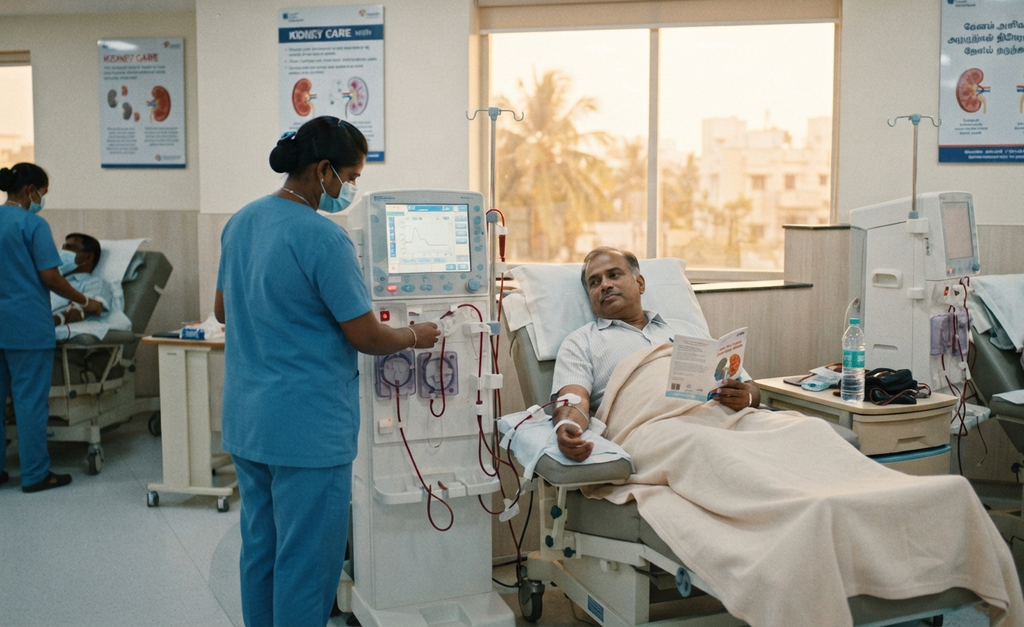
For patients receiving Dialysis Treatment in Chennai, the procedure generally involves the following stages when haemodialysis is performed.
For patients searching for a dialysis centre near Thiruporur, Padur or Kelambakkam, access to appropriate medical supervision and regular treatment facilities is an important consideration.
Step 1: Pre-Dialysis Assessment
Before starting the session, healthcare professionals check the patient’s blood pressure, weight and general health. These measurements help determine how much excess fluid needs to be removed.
Step 2: Vascular Access
The medical team connects the patient to the dialysis machine through a prepared access point. This may be an arteriovenous fistula, graft or central venous catheter, depending on the patient’s treatment plan.
Step 3: Blood Filtration
Blood passes through the dialyser, where waste products and excess fluid are removed. The machine helps maintain the required blood flow and filtration process.
Step 4: Continuous Monitoring
During the session, healthcare professionals monitor blood pressure, heart rate and the patient’s overall response to treatment. Any discomfort or unusual symptoms should be reported immediately.
Step 5: Completion of Treatment
Once the prescribed session is complete, the patient is disconnected from the machine. The medical team checks vital signs and provides any necessary post-treatment instructions.
The duration of a dialysis session varies according to the treatment type, prescription and individual medical needs.
What Patients Can Expect During Regular Dialysis
Starting dialysis can involve physical and emotional adjustments. Patients may need time to become familiar with the procedure, treatment schedule and lifestyle changes.
Patients may experience different physical sensations depending on their health condition and the type of dialysis they receive.
Common experiences include:
Tiredness: Some patients feel tired after a haemodialysis session.
Changes in blood pressure: Blood pressure may drop during treatment, occasionally causing dizziness or weakness.
Muscle cramps: Some patients experience cramps, particularly when excess fluid is removed.
Nausea: Changes in fluid balance or blood pressure may cause nausea during or after treatment.
Changes in appetite: Kidney disease and dialysis may affect appetite and nutritional requirements.
Not every patient experiences these effects. Patients should inform their healthcare team about persistent discomfort or new symptoms so that their treatment plan can be reviewed.
Possible Complications of Dialysis
Although dialysis helps manage advanced kidney disease, it can involve certain complications. The risks vary depending on the patient’s health, treatment method and vascular access.
Some possible complications include:
Low blood pressure: A sudden drop in blood pressure during haemodialysis may cause dizziness, nausea or faintness.
Infections: Patients with dialysis access points or peritoneal catheters may be at risk of infection. Proper hygiene and access-site care are important.
Muscle cramps: Rapid fluid removal during haemodialysis can sometimes lead to muscle cramps.
Access-related problems: An arteriovenous fistula, graft or catheter may develop blockages, clotting or other complications.
Peritonitis: Patients receiving peritoneal dialysis may develop an infection of the abdominal lining. Symptoms can include abdominal pain, fever and cloudy drainage fluid.
Patients should seek medical attention if they experience fever, severe abdominal pain, breathing difficulties, chest pain or other concerning symptoms.
Lifestyle and Dietary Guidelines for Dialysis Patients
Dialysis is not limited to the treatment session itself. Daily habits, food choices and fluid management also play an important role in managing kidney disease.
Patients should follow an individualised care plan recommended by their nephrologist and renal dietitian.
1. Follow a Kidney-Friendly Diet
Dietary requirements vary depending on kidney function, dialysis type and laboratory results. Patients may need to monitor their intake of sodium, potassium and phosphorus.
A renal dietitian can recommend suitable food choices and portion sizes based on individual nutritional needs.
2. Monitor Fluid Intake
Some dialysis patients need to limit their daily fluid intake to prevent fluid accumulation between sessions. The recommended amount depends on urine output, treatment frequency and overall health.
3. Take Medications as Prescribed
Patients may require medications to manage blood pressure, anaemia, mineral imbalances and other health conditions. Medicines should only be taken according to medical advice.
4. Maintain Physical Activity
Appropriate physical activity, such as walking or light exercises, may help maintain strength and mobility. Patients should discuss suitable activities with their healthcare team.
5. Attend Scheduled Dialysis Sessions
Skipping or delaying prescribed dialysis sessions can cause waste products and excess fluid to accumulate. Patients should follow their treatment schedule and contact their healthcare provider if they cannot attend an appointment.
How to Choose the Right Kidney Specialist and Hospital
Choosing an appropriate hospital and kidney specialist is an important part of managing chronic kidney disease. Patients and families should consider the medical expertise, available facilities and continuity of care before making a decision.
When looking for the Best Nephrologist in Chennai, consider the following factors:
Nephrology expertise: Check the specialist’s qualifications and experience in managing different kidney conditions.
Diagnostic facilities: Access to appropriate blood tests, urine tests and kidney imaging can support accurate diagnosis and monitoring.
Dialysis facilities: Check whether the hospital provides the required dialysis modality and appropriate patient monitoring.
Multidisciplinary care: Kidney patients may benefit from coordinated care involving nephrologists, dietitians, nurses and other specialists.
Emergency support: Access to appropriate emergency medical care is important for patients with advanced kidney disease.
Follow-up care: Regular consultations and monitoring help doctors assess treatment response and modify care plans when necessary.
Patients searching for the Best Kidney Doctor in Chennai should also consider whether the specialist can provide ongoing guidance for medication management, dietary changes and kidney function monitoring.
When searching for a kidney hospital in Padur or a kidney specialist in Kelambakkam, patients should consider specialist expertise, dialysis facilities, emergency support and follow-up services.
Is Dialysis a Permanent Treatment?
Dialysis may be temporary or long-term, depending on the underlying kidney condition.
Patients with acute kidney injury may need dialysis temporarily while their kidneys recover. However, people with advanced, irreversible kidney failure may require ongoing dialysis to maintain their health.
For eligible patients, kidney transplantation may be another treatment option. A nephrologist can evaluate the patient’s overall health and explain whether transplantation is appropriate.
The treatment approach for Kidney Failure Treatment in Chennai depends on the stage of kidney disease, associated medical conditions and the patient’s individual requirements.
When Should You Consult a Nephrologist?
Kidney diseases may develop gradually, and early symptoms are not always noticeable. Regular medical evaluation can help identify kidney problems before they progress.
Consider consulting a nephrologist if you experience:
- Persistent swelling in the feet, ankles or face.
- Changes in urination patterns.
- Blood in the urine.
- Unexplained fatigue or weakness.
- Persistent high blood pressure.
- Abnormal kidney function test results.
- Diabetes or hypertension with signs of kidney damage.
People with existing kidney conditions should follow their doctor’s recommended schedule for blood tests, urine tests and other investigations.
People searching for a kidney doctor near Navalur, a nephrologist near Siruseri or kidney treatment near Sholinganallur should seek medical advice if they experience persistent symptoms or abnormal kidney function test results.
Conclusion
Dialysis plays an important role in managing advanced kidney disease when the kidneys can no longer remove waste products and excess fluid effectively. Understanding the differences between haemodialysis and peritoneal dialysis, the treatment procedure and possible complications can help patients prepare for their care journey.
Choosing the right medical team is equally important. Patients looking for Kidney Failure Treatment in Chennai should seek guidance from qualified nephrologists who can assess their kidney function and recommend an appropriate treatment plan.
Patients from Padur, Kelambakkam, Navalur, Siruseri, Sholinganallur and Thiruporur can consider the accessibility of a nearby kidney hospital when planning regular consultations and dialysis sessions.
At Supreme Hospitals, patients can explore specialist medical care and seek guidance on kidney health, diagnosis and available treatment options. Consult a qualified healthcare professional for an evaluation and personalised medical advice.
Frequently Asked Questions (FAQs)
1. How many hours does a dialysis session take?
A typical haemodialysis session takes around three to five hours. However, the duration depends on the patient’s condition, dialysis prescription and treatment requirements.
2. Is dialysis painful?
Dialysis is generally not painful. However, patients may experience mild discomfort when needles are inserted or temporary symptoms such as cramps, dizziness or fatigue during treatment.
3. Can kidney patients lead a normal life with dialysis?
Many patients continue their daily activities, work and social routines while receiving dialysis. Following medical advice, maintaining a suitable diet and attending scheduled sessions can help manage their condition.
4. What is the difference between haemodialysis and peritoneal dialysis?
Haemodialysis uses a dialysis machine and an external filter to clean the blood. Peritoneal dialysis uses the lining of the abdomen as a natural filter to remove waste products and excess fluid.
5. Is dialysis required for every kidney disease patient?
No. Patients with early-stage kidney disease generally do not require dialysis. It is usually recommended when kidney function becomes severely reduced or certain complications develop.
6. Can dialysis patients eat regular food?
Dialysis patients can eat a variety of foods, but their diet may need adjustments. Sodium, potassium, phosphorus, protein and fluid intake should be managed according to individual medical recommendations.
7. How do doctors decide when dialysis is necessary?
Nephrologists consider kidney function, symptoms, blood test results, electrolyte levels and fluid balance before recommending dialysis. The decision is based on the patient’s overall medical condition rather than a single test result.
8. Which doctor treats kidney failure?
A nephrologist specialises in diagnosing and managing kidney diseases, including chronic kidney disease and kidney failure. They determine whether dialysis or another treatment approach is appropriate.