



Your room is quiet, yet your ears are not. You hear ringing, humming or hissing that will not stop. If that sounds familiar, you are not alone. Tinnitus affects about 14% of adults worldwide, roughly 740 million people, according to a 2022 review in JAMA Neurology. Most of them start searching for the causes of tinnitus because the sound appears without warning or a clear reason.
The good news is that many causes can be found and managed. At Supreme Hospitals, our ENT team sees patients with ear noises every week, and this guide explains what we want you to know:
- What ringing in ear really means
- The most common causes, from earwax to hearing loss
- Warning signs that need an ENT doctor
- What treatment can realistically do for you
Understanding the trigger is the first step toward relief.
What Does Ringing in Ear Actually Mean?
Tinnitus is the sense of hearing a sound when no outside sound is present. It is a symptom, not a disease on its own. Think of it like a fever: it tells you something is off, but not what.
People describe the meaning of the ear ringing in many ways. Some hear a high-pitched ring. Others notice a humming sound in ear, a whistling in ear, a hissing sound in ear, or a buzzing noise in ear. Some simply say they have noise in their ear that nobody else can hear. The sound can be soft or loud, constant or occasional, and in one ear or both.
A few people hear a rhythmic beat that matches their pulse. Doctors call this pulsatile tinnitus, and it needs a closer look, which we cover below.
Age, Hearing Loss and Noise: The Everyday Causes of Tinnitus
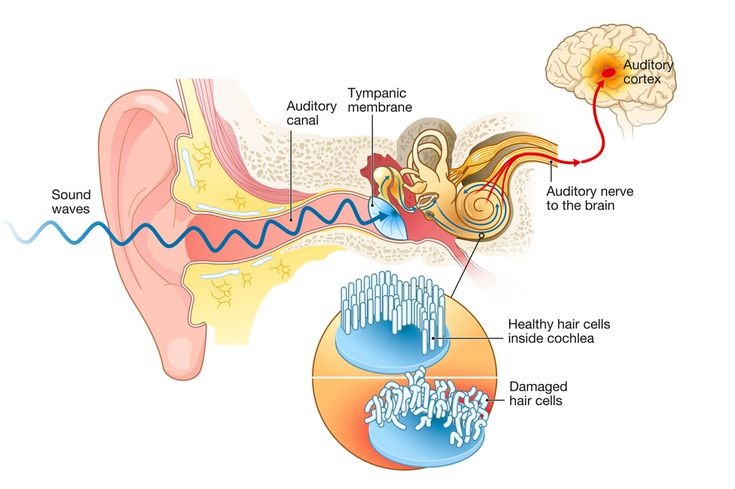
Most tinnitus starts with damage to the tiny hair cells in your inner ear. These cells turn sound into signals your brain can read. When they wear out or break, the brain fills the silence with its own noise. That is why the causes of tinnitus in ear so often lead back to hearing loss.
Age is the biggest factor. The same JAMA Neurology review found tinnitus in 9.7% of adults aged 18 to 44, compared with 23.6% of adults aged 65 and older. Hearing fades slowly with age, and the ringing often arrives with it.
Noise is the second major trigger. Think of these everyday examples:
- A factory worker who spends years beside loud machines
- A commuter who plays music at full volume through earbuds
- A wedding guest who stands next to the speakers for hours
- Someone who hears a single loud blast, such as a firecracker going off close by
Loud sound can cause a short burst of ringing that fades, or lasting damage that does not. The review also estimates that 9.8% of adults live with chronic tinnitus, so protecting your ears early is worth the effort.
Here is the practical takeaway. If you work around noise, wear earplugs and keep headphone volume at a moderate level. If the ringing began after a loud event and lasts more than a few days, get a hearing test.
Other Causes of Ringing in the Ears
Hearing loss and noise are the usual suspects, but they are not the only ones. Many noise in ear causes are simple and treatable.
Earwax and Ear Infections
A plug of earwax can press on the eardrum and create a blocked, noisy feeling. Middle ear infections and fluid behind the eardrum, often after a cold or sinus problem, can do the same. Avoid cotton buds and ear candles. Let a doctor clean the ear safely.
Medicines That Affect Hearing
Some medicines can irritate the inner ear. Examples include high doses of aspirin, certain antibiotics, some water tablets (diuretics) and some cancer drugs. Never stop a prescribed medicine on your own. Tell your doctor about the ringing, and they can review your dose or look for an alternative.
Meniere’s Disease and Other Inner Ear Conditions
Meniere’s disease can cause ringing with spinning dizziness and a feeling of fullness in the ear. Otosclerosis, where a tiny ear bone stiffens, can also cause tinnitus along with gradual hearing loss.
Jaw, Neck and Head Problems
Problems with the jaw joint, a neck injury or a blow to the head can all trigger tinnitus. If you clench your teeth or your jaw clicks, mention it to your doctor.
Blood Pressure and Blood Vessel Problems
High blood pressure and narrowed blood vessels near the ear can cause pulsing in ear, a whooshing beat that follows your heartbeat. This type should always be checked by a doctor.
Stress, Anxiety and Lifestyle Triggers
Stress does not usually cause tinnitus on its own, but it can make the sound louder and harder to ignore. Too much caffeine, nicotine, alcohol and poor sleep can also push it up.
| Cause | How it often sounds | Common clue |
| Hearing loss | High-pitched ringing | Trouble following speech in noisy places |
| Loud noise exposure | Ringing or hissing | Started after a concert, work shift or blast |
| Earwax or infection | Muffled noise, buzzing | Blocked feeling, pain or discharge |
| Medicines | Ringing in both ears | Began after starting a new medicine |
| Meniere’s disease | Low roaring or ringing | Dizziness and ear fullness |
| Blood vessel problems | Pulsing or whooshing | Beat matches your heartbeat |
| Stress and lifestyle | Louder, more noticeable sound | Worse during tense days or poor sleep |
Left Ear Ringing or Ringing in One Ear: Should You Worry?
Both ears ringing usually points to age, noise or a medicine. Left ear ringing, or ringing in just one ear, deserves more attention. It is more often linked to a local problem such as wax, infection, or sudden hearing loss. In rare cases, it can signal a growth on the hearing nerve.
If you keep asking why my ear is buzzing on one side only, book an examination. Ringing in one ear that lasts more than a week, or that comes with hearing loss, should not wait.
When to See an ENT Doctor
Most short bursts of ringing fade within minutes. See an ENT specialist soon if you notice any of these:
- Ringing that lasts more than a week or keeps returning
- Tinnitus in one ear only
- Hearing loss, a blocked ear or a feeling of fullness
- Dizziness or balance problems
- A pulsing sound that matches your heartbeat
- Ringing after a head or neck injury
- Noise that disturbs your sleep, work or mood
Sudden hearing loss with ringing is an emergency. Treatment works best when it starts within the first few days, so go to a hospital the same day.
If you live near Padur, Navalur or Kelambakkam, you do not need to travel far. An ENT doctor in Chennai at Supreme Hospitals can examine your ears and explain what is going on. If you are searching for an ENT specialist near OMR or an ENT hospital in Padur, Chennai, our ENT department is a good place to start. Your doctor may also send you to an audiologist in Chennai for a detailed hearing test. You can read more general guidance on the condition from the National Institute on Deafness and Other Communication Disorders.
How Doctors Find the Cause of Tinnitus
There is no single test for tinnitus, so your doctor builds the picture step by step.
- Questions: When did it start? Which ear? What does it sound like? Which medicines do you take?
- Ear examination: A small light and scope check for wax, infection or eardrum problems.
- Hearing test: Audiometry shows whether hearing loss sits behind the noise.
- Further checks: If the ringing is one-sided or pulsing, your doctor may advise blood pressure checks or scans to rule out other causes.
Tinnitus Treatment: How to Treat Ringing Ear and What Helps
The honest answer on how to heal tinnitus is that it depends on the cause. When doctors find and fix the cause, the sound can fade or stop. When the cause is permanent, such as long-standing hearing loss, treatment focuses on making the sound less bothersome. For anyone looking for tinnitus treatment in Chennai, the first step is always an accurate diagnosis.
| Cause | Usual treatment |
| Earwax | Safe wax removal by a doctor |
| Ear infection or fluid | Medicines and treating the sinus or throat problem behind it |
| Hearing loss | Hearing aids, which often reduce the ringing as well |
| Medicine side effect | Dose review or a change in medicine, guided by your doctor |
| Blood pressure or vessel problems | Treating the underlying condition |
| Long-term tinnitus | Sound therapy, counselling or tinnitus retraining therapy, and stress management |
If you want to know how to treat ringing ears at home while you wait for your visit, try soft background sounds such as a fan or gentle music. Silence makes tinnitus feel louder.
Daily Habits That Make Tinnitus Easier to Live With
- Keep headphone volume low and take listening breaks
- Wear earplugs around loud machines, crowds or fireworks
- Cut back on caffeine, nicotine and alcohol if they make the sound worse
- Sleep at regular times and use soft background sound at night
- Practise relaxation, slow breathing or light exercise to lower stress
- Check your blood pressure regularly
Frequently Asked Questions
What is the main cause of tinnitus?
Hearing loss from ageing or loud noise is the most common cause. Earwax, infections, certain medicines and stress can also play a part.
Can tinnitus go away on its own?
Yes, especially when it comes from a loud event, earwax or a mild infection. If it lasts more than a week, get it checked.
Can stress cause ringing in the ears?
Stress can make tinnitus louder and harder to ignore, though it is rarely the only cause. Managing stress often brings real relief.
Is ringing in one ear serious?
Not always, but ringing in one ear only should be examined by an ENT doctor to rule out wax, infection, sudden hearing loss or other causes.
Can tinnitus be cured?
Some causes, such as wax or infection, can be treated completely. Where the cause is permanent, treatment can still reduce how much the sound affects your life.
Which doctor should I see for tinnitus?
Start with an ENT specialist. They can examine your ears, arrange hearing tests and plan the right treatment.
Conclusion
Tinnitus can feel confusing because the sound seems to come from nowhere. In reality, it usually points to a cause that can be found, whether that is hearing loss, noise damage, earwax, a medicine, or stress. Some causes clear up quickly. Others need long-term management, but relief is possible in almost every case.
Do not ignore ringing that is constant, one-sided, pulsing, or paired with hearing loss or dizziness. An early check gives you answers and more treatment options. If the noise is bothering you, the ENT team at Supreme Hospitals is ready to help you find the cause and plan the next step. Book your ENT consultation today.
Author Bio
Dr. Priya K, MBBS, MS ENT Dr. Priya K is an ENT specialist at Supreme Hospitals, Padur, Chennai. She focuses on ear, nose and throat diagnosis and microscopic ear surgery. Patients come to her with ringing ears, blocked ears and long-standing ear problems, and her approach is to find the cause first and explain the options in plain language. Book a visit with her through the ENT department.
Dr. Puja Ghosh, MBBS, MS ENT Dr. Puja Ghosh is an ENT specialist at Supreme Hospitals, Padur, Chennai. Her work covers allergy and sinusitis care and hearing loss treatment, so she often sees people whose hearing changes come with ear ringing. She aims to give patients a clear diagnosis and a practical plan. You can book an appointment with her team.
Medical disclaimer: This article is for general information and does not replace advice from a qualified doctor. If you have sudden hearing loss, severe dizziness or ringing after a head injury, seek medical care immediately.