



An MRI scan is an important diagnostic imaging procedure that helps doctors examine internal organs, bones, joints, the brain and soft tissues. However, some people experience anxiety or fear when undergoing an MRI scan because of the enclosed space inside the machine. This condition is commonly associated with claustrophobia, which can make the scanning experience uncomfortable.
If you feel nervous about being inside an MRI machine, you are not alone. Many patients experience anxiety due to the narrow scanner space, loud scanning noises or the need to remain still for an extended period. Fortunately, several practical techniques can help manage these feelings and make the procedure more comfortable.
Choosing an experienced diagnostic facility with appropriate patient support can also make a difference. Patients looking for the Best Radiology Hospital in Chennai can explore the diagnostic services available at Supreme Hospitals.
What Is Claustrophobia During an MRI Scan?
Claustrophobia is the fear of enclosed or confined spaces. During an MRI scan, patients usually lie on a movable examination table that slides into a cylindrical scanner. For individuals with claustrophobia, this environment may trigger anxiety or panic.
An MRI machine uses a strong magnetic field and radio waves to produce detailed images of internal body structures. Unlike X-rays and CT scans, MRI does not use ionising radiation.
However, the enclosed scanner design and the need to remain still can create discomfort for some patients.
Patients visiting an MRI Scan Centre in Padur can discuss their concerns with the healthcare team before undergoing the examination.
Common Symptoms of MRI-Related Claustrophobia
Anxiety during an MRI scan can cause physical and emotional symptoms. Recognising these symptoms helps patients communicate their concerns before the procedure.
Common symptoms include:
- Increased heartbeat or palpitations
- Sweating or excessive perspiration
- Shortness of breath
- Dizziness or lightheadedness
- Feeling trapped or uncomfortable
- Restlessness and difficulty remaining still
- Nausea or trembling
- Sudden feelings of panic
These symptoms may vary depending on the individual’s anxiety level. If you have experienced claustrophobia during previous medical examinations, inform your doctor before scheduling an MRI scan.
Why Do Some Patients Feel Anxious During an MRI Scan?
Several factors can contribute to anxiety during an MRI examination.
Enclosed scanner space: The cylindrical design of conventional MRI machines may create a feeling of confinement.
Loud scanning noises: MRI scanners produce repetitive knocking, tapping and buzzing sounds during image acquisition. These unexpected noises can increase nervousness.
Long examination duration: Depending on the body part being examined and the imaging protocol, an MRI scan may take approximately 15 to 60 minutes or longer.
Fear of losing control: Some patients become anxious because they cannot move freely during the procedure.
Previous unpleasant experiences: Patients who have experienced panic attacks or uncomfortable medical examinations may feel more anxious about undergoing another scan.
Understanding these triggers can help patients prepare mentally and physically.
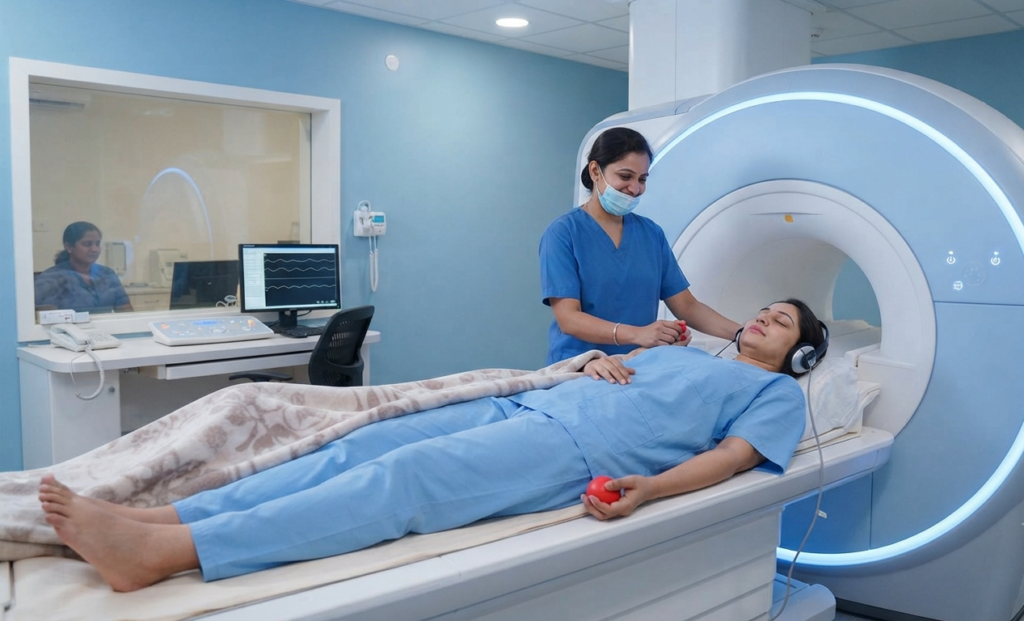
10 Tips to Manage Anxiety During an MRI Scan
If you experience claustrophobia, the following strategies may help you feel more relaxed during an MRI examination.
Discuss Your Fear with the Healthcare Team
Inform your doctor and radiology team about your claustrophobia before the appointment. Explain your previous experiences, specific fears and any symptoms you experience in confined spaces.
The healthcare team can explain the procedure, discuss available comfort measures and help determine the most appropriate approach.
When selecting the Best Radiology Hospital in Padur, consider the availability of patient guidance and support throughout the diagnostic process.
Understand the MRI Procedure Beforehand
Not knowing what to expect can increase anxiety. Ask the radiology team to explain how the scanner works, how long the examination may take and what sensations or sounds you might experience.
Understanding the procedure can reduce uncertainty and help you feel more prepared.
Practise Deep Breathing Exercises
Deep breathing is a simple relaxation technique that may help reduce anxiety.
Try the following steps:
- Sit or lie down comfortably.
- Slowly inhale through your nose.
- Allow your abdomen to expand naturally.
- Gently exhale through your mouth.
- Repeat the process until you feel relaxed.
Practising these techniques before your appointment may help you manage nervousness during the examination.
Keep Your Eyes Closed
Some patients find it helpful to close their eyes before entering the scanner. Avoiding visual awareness of the enclosed space may reduce feelings of confinement.
Keep your eyes closed throughout the examination if this makes you comfortable.
Use Earplugs or Headphones
MRI scanners generate loud sounds while capturing images. Depending on the facility and scanner, patients may receive earplugs or headphones to reduce noise.
Some facilities may also offer music during the procedure. Ask the radiology team about the available options.
Practise Relaxation and Mindfulness
Mindfulness techniques can help shift attention away from anxious thoughts.
You can try:
- Counting your breaths slowly.
- Visualising a peaceful place.
- Repeating a calming phrase.
- Focusing on relaxing individual muscle groups.
These activities may help you remain calm while the scanner captures images.
Ask About Communication During the Scan
Most MRI procedures include a communication system that allows patients to speak with the radiology team.
Patients may also receive an emergency call button or squeeze bulb to alert the staff if they feel uncomfortable.
Knowing that assistance is available can provide reassurance during the procedure.
Wear Comfortable Clothing
Wear loose, comfortable clothing without metal components, zippers or decorative accessories. The radiology team will explain which clothing items are suitable.
You may be asked to remove jewellery, watches, hearing aids and other metal objects before entering the MRI room.
Ask About Open MRI Options
Some diagnostic facilities may offer open MRI scanners or scanners with wider openings. These designs can be more comfortable for patients who experience claustrophobia.
However, scanner availability, image quality and suitability depend on the examination and clinical requirements.
Discuss these options with your doctor or radiology team before scheduling your appointment.
Discuss Medication for Severe Anxiety
If your claustrophobia is severe, your doctor may consider prescribing medication to help you relax during the procedure.
Never take sedatives or anti-anxiety medication without medical advice. If sedation is planned, the healthcare team will provide instructions regarding preparation, monitoring and transportation after the examination.
How to Prepare for an MRI Scan If You Have Claustrophobia
Proper preparation can make your MRI experience more manageable.
Consider these steps before your appointment:
- Inform your doctor about your fear of enclosed spaces.
- Share details of previous MRI experiences.
- Ask about the scanner type and expected examination duration.
- Follow the instructions regarding food, beverages and medication.
- Wear comfortable clothing without metal components.
- Arrive early to avoid unnecessary appointment-related stress.
- Ask whether a support person can accompany you to the MRI department.
- Inform the radiology team about any implants, medical devices or other relevant medical conditions.
Patients searching for the Best Hospital in Chennai should consider the availability of appropriate diagnostic facilities and professional guidance when planning an MRI examination.
What Happens If You Cannot Complete an MRI Scan?
Some patients may find it difficult to remain inside the scanner because of intense anxiety or panic symptoms.
If you feel uncomfortable during the procedure, inform the radiology team using the communication system or emergency call button. The staff can pause the examination when clinically appropriate and provide assistance.
Depending on your medical needs, the doctor may consider:
- Additional relaxation techniques.
- An alternative scanner design, if available.
- A modified imaging approach, where clinically appropriate.
- Prescribed medication or supervised sedation.
- Another suitable diagnostic imaging examination.
It is important not to force yourself through severe anxiety without informing the healthcare team. The priority is obtaining the required diagnostic images while maintaining patient safety.
Who May Need Special Assistance During an MRI Scan?
Certain individuals may benefit from additional preparation and support before an MRI examination.
These include:
- Patients with a history of claustrophobia.
- Individuals who have experienced panic attacks.
- Children who may feel uncomfortable inside the scanner.
- Patients with previous difficult MRI experiences.
- Individuals who experience anxiety during medical procedures.
- Patients who have difficulty remaining still for extended periods.
A doctor can assess individual requirements and recommend appropriate arrangements before the examination.
Why Choose Supreme Hospitals for Radiology Services?
Choosing an appropriate healthcare facility is important when undergoing diagnostic imaging. Patients should consider the availability of diagnostic services, medical guidance, patient safety protocols and support during examinations.
At Supreme Hospitals, patients can access healthcare services supported by medical professionals across multiple specialties.
When considering an MRI Scan Centre in Padur, patients should discuss their diagnostic requirements, preparation instructions and anxiety-related concerns with the healthcare team.
Whether you need an MRI examination as part of a routine diagnostic evaluation or further medical investigation, discussing your concerns beforehand can help you prepare for the procedure.
Frequently Asked Questions (FAQs)
Can I undergo an MRI scan if I have claustrophobia?
Yes. Many patients with claustrophobia can undergo MRI examinations with appropriate preparation and support. Discuss your concerns with your doctor and radiology team before the procedure.
How long does an MRI scan take?
An MRI scan generally takes around 15 to 60 minutes, depending on the body part being examined and the imaging requirements. Some examinations may take longer.
Can I stop an MRI scan if I feel uncomfortable?
Yes. Most MRI facilities provide a communication system and an emergency call button. You can alert the radiology team if you experience discomfort or anxiety during the examination.
Are open MRI scanners better for claustrophobic patients?
Open MRI scanners may provide a less enclosed environment and improve comfort for some patients. However, their availability and suitability depend on the examination and diagnostic requirements.
Can I take anxiety medication before an MRI scan?
Your doctor may prescribe medication if necessary. Do not take anti-anxiety medication or sedatives without medical advice. Follow all instructions provided by your healthcare team.
Is an MRI scan painful?
No. An MRI scan is generally painless. However, remaining still for an extended period may cause temporary discomfort. Some examinations may require contrast injection, which can cause brief discomfort at the injection site.
What should I do if I experience a panic attack during an MRI scan?
Inform the radiology team immediately using the communication system or emergency call button. The staff can assist you and pause the examination when appropriate.
Where can I get an MRI scan in Padur?
Patients looking for an MRI Scan Centre in Padur can contact Supreme Hospitals to enquire about available diagnostic services, appointment procedures and examination requirements.
Conclusion
Experiencing claustrophobia during an MRI scan can be challenging, but it does not necessarily mean you cannot complete the examination. Understanding the procedure, practising relaxation techniques, communicating with the radiology team and exploring suitable scanner options can help reduce anxiety.
If you are planning an MRI examination, discuss your concerns with your doctor beforehand. Proper preparation and professional guidance can help make the diagnostic experience more comfortable.
For healthcare and diagnostic service information, visit Supreme Hospitals.