



Stomach pain is a common complaint among children and can happen for many reasons, from simple indigestion or constipation to infections and other medical conditions. While occasional stomach pain in kids may not be serious, persistent, severe, or recurring pain should not be ignored.
Understanding the common causes and warning signs can help parents know when home care may be appropriate and when to consult a pediatrician.
What Causes Stomach Pain in Kids?
Stomach pain in children can have several causes. Some are temporary and resolve with basic care, while others may require medical evaluation.
Common causes include:
- Constipation
- Gas and indigestion
- Stomach infections
- Food intolerance or allergies
- Stress and anxiety
- Urinary tract infections
- Appendicitis
- Other gastrointestinal conditions
The location, severity, duration, and symptoms associated with the pain can provide useful clues about its possible cause.
Common Reasons for Stomach Pain in Children
Constipation
Constipation is one of the common reasons for stomach pain in kids. Children may experience abdominal discomfort, bloating, hard stools, or difficulty passing stools.
Encouraging adequate fluids, fiber-rich foods, and regular physical activity may help prevent constipation.
Gas and Indigestion
Eating too quickly, overeating, consuming certain foods, or swallowing excess air can cause gas and indigestion. This may result in temporary child stomach pain, bloating, or discomfort.
Stomach Infections
Viral or bacterial infections can cause abdominal pain in children, particularly when accompanied by vomiting, diarrhea, fever, or reduced appetite.
Keeping the child hydrated is important when vomiting or diarrhea is present.
Food Intolerance or Allergies
Some children may develop abdominal discomfort after consuming specific foods. Food intolerance can sometimes cause bloating, gas, diarrhea, or stomach pain.
If symptoms repeatedly occur after eating a particular food, parents should discuss them with a pediatrician rather than removing multiple foods from the child’s diet without professional guidance.
Stress and Anxiety
Emotional stress, anxiety, changes at school, or other concerns can sometimes contribute to recurring stomach pain in children. This does not mean the pain is not real. Children can experience physical symptoms in response to emotional stress.
Stomach Pain Around the Belly Button in Children
Stomach pain around the belly button in children is relatively common and may occur with constipation, gas, infections, or other digestive problems.
However, the location and pattern of pain can change as some conditions progress. For example, appendicitis may initially cause pain around the belly button before the pain becomes more localized.
Parents should pay attention to whether the pain is becoming more severe, persistent, or associated with other concerning symptoms.
Stomach Pain in Kids With Vomiting, Fever, or Diarrhea
Stomach pain and vomiting in children may occur with stomach infections, food-related illness, or other conditions.
Similarly, stomach pain and fever in children may indicate an infection or another condition requiring medical assessment.
When stomach pain with diarrhea in children occurs, dehydration is an important concern. Parents should watch for reduced urination, dry mouth, excessive thirst, unusual sleepiness, or weakness.
If symptoms are severe or worsening, professional medical evaluation is recommended. Parents can also explore healthcare services at Supreme Hospitals for appropriate medical guidance.
Stomach Pain in Kids: Home Remedies and Care
For mild stomach discomfort without warning signs, simple supportive measures may help:
- Encourage the child to drink adequate fluids.
- Offer light, easily tolerated meals.
- Encourage adequate rest.
- Avoid foods that appear to trigger discomfort.
- Monitor bowel movements.
- Observe whether symptoms improve or worsen.
Parents searching for stomach pain in kids’ home remedies should avoid giving medicines or supplements without appropriate medical advice, particularly in younger children.
When Should You Worry About Stomach Pain in Children?
Knowing stomach pain in children when to worry is important. Seek prompt medical attention if your child has:
- Severe or worsening abdominal pain
- Persistent or recurring pain
- Repeated vomiting
- Blood in vomit or stool
- A swollen or very tender abdomen
- Significant fever with abdominal pain
- Signs of dehydration
- Unusual weakness or excessive sleepiness
- Difficulty breathing
- Pain that prevents normal movement or walking
Parents should not rely solely on home remedies when symptoms are severe, persistent, or unusual.
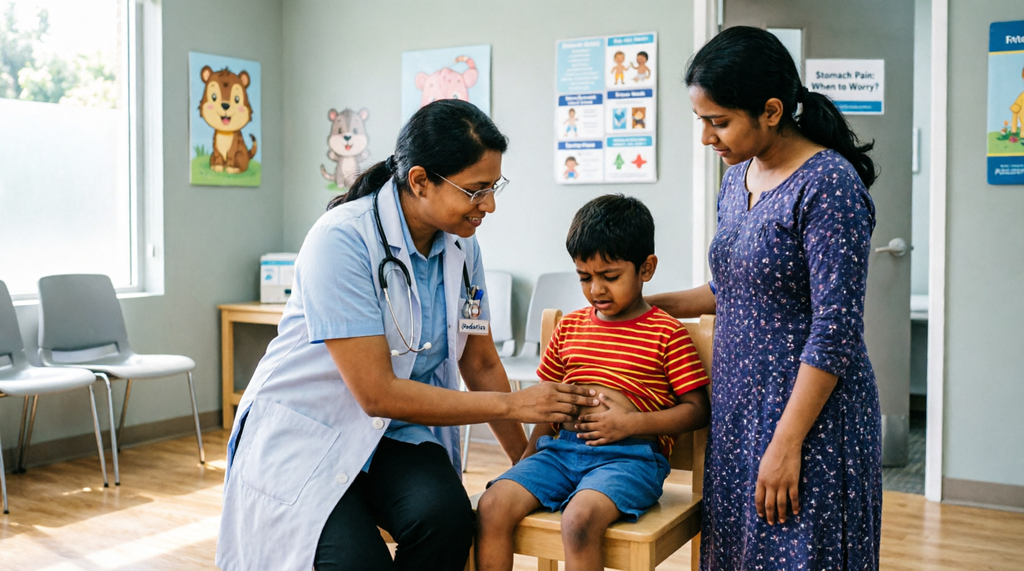
When Should Your Child See a Pediatrician?
If your child experiences recurring abdominal discomfort, unexplained weight loss, changes in bowel habits, poor appetite, or pain that interferes with school, sleep, or daily activities, a pediatric evaluation can help identify the underlying cause.
The Pediatrics Department at Supreme Hospitals provides medical evaluation and care for children with a range of health concerns.
A pediatrician may ask about the child’s symptoms, diet, bowel movements, medical history, and other associated symptoms before deciding whether further tests are required.
How Is Abdominal Pain in Children Diagnosed?
Diagnosis depends on the child’s symptoms and physical examination. A pediatrician may evaluate:
- Location and severity of pain
- When the pain started
- How frequently it occurs
- Bowel and urinary symptoms
- Fever, vomiting, or diarrhea
- Recent food intake
- Medical and family history
Depending on the findings, the doctor may recommend blood tests, urine tests, stool tests, ultrasound, or other investigations.
Treatment for Stomach Pain in Kids
Treatment depends on the underlying cause. Constipation, infections, food-related problems, and other conditions may require different approaches.
Parents should avoid giving stomach pain in kids medicine without medical advice, as the appropriate treatment and dosage depend on the child’s age, weight, symptoms, and
diagnosis.
For ongoing or concerning symptoms, professional assessment is the safest approach. Families can learn more about pediatric care and other healthcare services available at Supreme Hospitals.
How Can Parents Help Prevent Stomach Problems?
Some everyday habits can support children’s digestive health:
- Encourage regular meals.
- Include fruits, vegetables, and other fiber-rich foods.
- Encourage sufficient water intake.
- Promote regular physical activity.
- Maintain good hand hygiene.
- Avoid unnecessary use of medicines.
- Help children manage stress and maintain healthy sleep routines.
These habits cannot prevent every cause of abdominal pain, but they can support overall health and digestive well-being.
Frequently Asked Questions
1. What is the most common reason for stomach pain in kids?
Constipation, gas, indigestion, and stomach infections are among the common causes. The exact cause depends on the child’s symptoms and medical history.
2. When should I worry about stomach pain in children?
Severe, persistent, or worsening pain, repeated vomiting, blood in vomit or stool, significant fever, dehydration, or a swollen abdomen should prompt medical attention.
3. Can constipation cause stomach pain in children?
Yes. Constipation can cause abdominal discomfort, bloating, hard stools, and difficulty passing stools.
4. Are home remedies safe for stomach pain in kids?
Simple measures such as adequate fluids, rest, and light meals may help with mild discomfort. However, persistent or severe symptoms require medical evaluation rather than relying only on home remedies.
5. When should I take my child to a pediatrician for stomach pain?
Consult a pediatrician when pain is severe, recurring, persistent, associated with concerning symptoms, or interfering with the child’s normal activities.
Conclusion
Stomach pain in kids can result from minor digestive problems or conditions that require medical attention. Parents should consider the child’s symptoms, pain severity, duration, and associated signs when deciding whether to monitor the child at home or seek professional care.
When stomach pain is severe, persistent, recurring, or accompanied by vomiting, fever, diarrhea, dehydration, or other warning signs, consulting a pediatrician is important for timely diagnosis and appropriate treatment.