



Medically reviewed by: Dr. Arun Arockia Rajesh. J, Consultant Interventional Cardiologist, Supreme Hospitals, Padur, Chennai. the Cardiology Department, Supreme Hospitals.
A sudden squeeze in your chest while you are stuck in traffic or racing a deadline can scare anyone. Your first thought is usually the heart, and that instinct is right to take it seriously. Yet stress related chest pain is far more common than most people realise.
- Between 80% and 95% of people who reach the emergency department with chest pain have no cardiac disease or other cardiopulmonary emergency, according to a study in the Journal of Emergency Medicine.
- The same research notes that up to 55% of non-cardiopulmonary chest pain may come from anxiety or panic disorders, and most of these cases go undiagnosed.
In this guide, our cardiology team explains how stress triggers chest pain, how to tell it apart from heart related chest pain, and when you should see a doctor.
Quick answer: Yes, stress can cause chest pain. Stress hormones tighten your muscles, speed up your heartbeat and change your breathing, which creates chest discomfort that can feel like a heart problem. Any new or severe chest pain still needs a medical check.
Can Stress Cause Chest Pain? How Your Body Reacts
Yes, stress and chest pain are closely linked. When you feel under pressure, your brain triggers the fight-or-flight response. Your body releases adrenaline and cortisol, and these hormones change how your heart, muscles and lungs work.
The Fight-or-Flight Response and Your Heart
Adrenaline makes your heart beat faster and raises your blood pressure. You may notice a pounding heart or a tight band across your chest. This is the main reason chest pain from stress feels so alarming.
Muscle Tension and Fast Breathing
Stress makes the muscles around your ribs and shoulders clench. You also tend to breathe faster and shallower, which strains the chest wall. Many people describe the result as a dull ache or a sharp, catching pain.
What Causes Stress Induced Chest Pain?
Several triggers can set off stress induced chest pain:
- Panic attacks and anxiety chest pain
- Work pressure, exams or financial worry
- Grief, family conflict or lack of sleep
- Acid reflux, which stress often makes worse
- Too much caffeine, smoking or alcohol
If you often feel chest discomfort from stress, track what happens before each episode. A simple diary helps your doctor find the pattern faster.
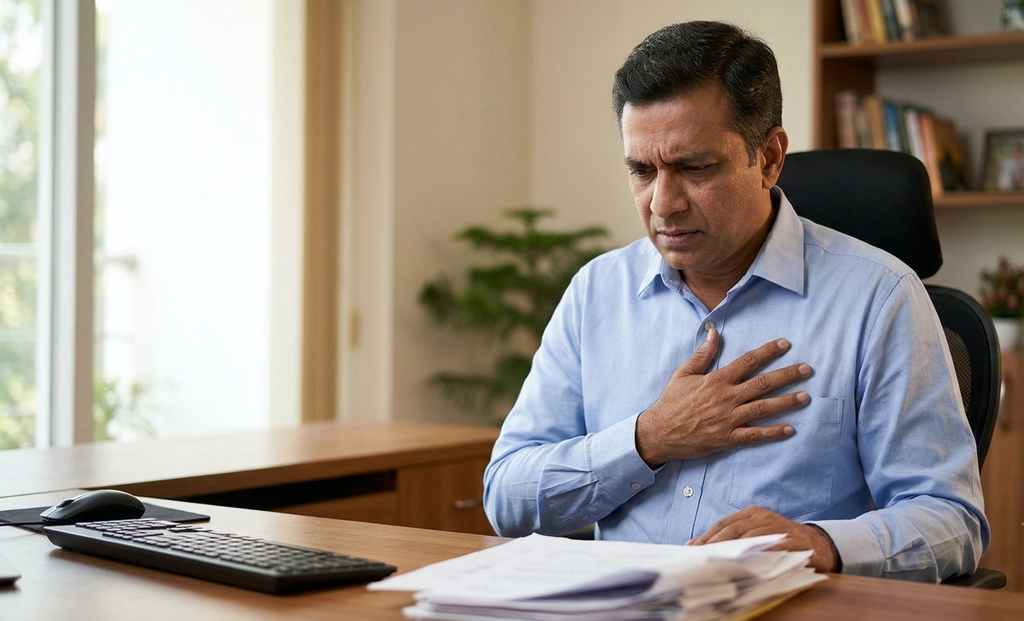
What Does Stress Related Chest Pain Feel Like?
Stress related chest pain varies from person to person. Knowing the usual pattern helps you stay calm, though it never replaces a proper check-up.
Common Stress Related Chest Pain Symptoms
Most people report one or more of these:
- A sharp, stabbing or fleeting pain in the centre or left side of the chest
- A tight, heavy or burning feeling
- A racing or fluttering heartbeat
- Shortness of breath or a feeling that you cannot take a deep breath
- Tingling in the hands, sweating, dizziness or trembling
- A sense of fear or doom
These chest pain symptoms often appear suddenly during a stressful moment and ease when you relax.
How Long Does Stress Related Chest Pain Last?
It usually lasts a few minutes. The physical symptoms of a panic attack typically peak within about 10 minutes, according to the American Heart Association. Some people feel a dull ache or soreness for hours afterwards because the chest muscles stay tight.
If pain lasts longer than 15 minutes, keeps returning or gets worse, do not wait it out. Seek medical help.
Stress Chest Pain vs Heart Pain: How to Tell the Difference
This is the question that worries people most. Stress chest pain vs heart pain can feel very similar, so doctors rely on a few clues. Remember, these clues guide you but cannot confirm a diagnosis at home.
| Feature | Stress or Anxiety Chest Pain | Heart Related Chest Pain |
| Pain type | Sharp, stabbing or fleeting | Pressure, squeezing, heaviness or fullness |
| Location | Mostly stays in the chest | Can spread to the arm, jaw, neck or back |
| Trigger | Stressful event or panic | Physical effort, climbing stairs, or sometimes no trigger |
| Duration | Often settles within minutes | Lasts longer, comes back or worsens |
| With rest | Eases as you calm down | May not ease with rest |
| Other signs | Tingling, trembling, fear | Cold sweat, nausea, breathlessness |
Anxiety Chest Pain vs Heart Attack
Most heart attacks cause pressure, squeezing or pain in the chest, along with breathlessness, cold sweats, nausea or discomfort in the arm, neck or jaw, as the American Heart Association explains. Symptoms vary between men and women. Women may notice less obvious signs, such as fatigue, nausea or back pain, and people with diabetes can have milder symptoms.
When you cannot tell the difference, treat it as heart related chest pain and get help right away.
Can Long-Term Stress Harm Your Heart?
Occasional stress related chest pain rarely damages the heart. Chronic stress is a different story. Constant pressure keeps your blood pressure and heart rate high, disturbs sleep and pushes many people towards smoking, junk food and skipping exercise. Over the years, these habits raise the risk of high blood pressure and coronary artery disease.
Intense emotional shock can also trigger stress cardiomyopathy, sometimes called broken heart syndrome. It causes sudden chest pain and temporary weakness of the heart muscle, and it needs urgent hospital care.
So yes, can emotional stress cause chest pain? Absolutely. And over time it can also add to your heart risk, which is why early guidance from a cardiologist matters.
How to Relieve Stress Related Chest Pain
Once a doctor has ruled out a heart problem, these steps can help you manage episodes and prevent them.
Quick Steps During an Episode
- Stop and sit down. Find a quiet spot and loosen tight clothing.
- Slow your breathing. Breathe in through your nose for four counts, then breathe out gently for six counts. Repeat for two to three minutes.
- Relax your shoulders. Drop them away from your ears and unclench your jaw.
- Ground yourself. Name five things you can see around you. This pulls your mind away from the panic.
- Sip water and avoid tea, coffee or cigarettes until you settle.
Daily Habits That Lower Stress
- Walk for 30 minutes on most days
- Sleep seven to eight hours at a regular time
- Cut back on caffeine, alcohol and tobacco
- Practise yoga, meditation or deep breathing every day
- Talk to a trusted friend, family member or counsellor about what weighs on you
If anxiety keeps triggering chest pain, ask your doctor about counselling or other mental health support. Treating the stress often stops the pain.
When to Worry About Chest Pain: Red Flags
Never try to diagnose chest pain on your own. Call 108 or go to the nearest emergency department immediately if you have chest pain with any of these:
- Pressure, squeezing or heaviness that lasts more than a few minutes
- Pain that spreads to the arm, shoulder, neck, jaw or back
- Cold sweat, nausea or vomiting
- Severe shortness of breath or fainting
- Pain that begins during exertion or wakes you from sleep
- A history of heart disease, diabetes, high blood pressure or high cholesterol
When to worry about chest pain is simple: if you are unsure, get checked. Doctors would always rather clear a false alarm than miss a heart attack.
When to See a Doctor: Chest Pain Treatment in Chennai
Book a visit even when the pain eases quickly. Repeated episodes, new symptoms or a family history of heart disease all justify a check-up. When to see a doctor for chest pain comes down to one rule: any chest pain you cannot explain deserves a proper evaluation.
What a Cardiologist Checks
Your doctor will ask about your symptoms, stress levels and medical history. Depending on your case, evaluation may include an ECG, blood tests, an echocardiogram or a treadmill stress test. These tests show whether your chest pain comes from the heart, the lungs, the stomach or stress.
At Supreme Hospitals, our cardiology department offers a full range of cardiac care, from diagnosis to treatment, under experienced cardiologists. Dr. Arun Arockia Rajesh. J specialises in interventional cardiology and coronary artery disease management, while Dr. Anand Manjunath. K brings expertise in diagnostic and therapeutic cardiac care, including paediatric cardiology.
Heart Care Near OMR, Padur, Kelambakkam, Siruseri and Navalur
Looking for a cardiologist in Chennai who is easy to reach? Our heart hospital in Padur sits on the OMR corridor, so it is convenient for families looking for a cardiologist near Kelambakkam, Siruseri or Navalur. Whether you need a chest pain doctor in Chennai for a quick second opinion or a chest pain specialist in Chennai for a detailed work-up, our team is here to help. If you are searching for chest pain treatment in OMR Chennai, you can reach a cardiology hospital in Chennai that combines accurate diagnosis with caring follow-up.
Conclusion
Stress related chest pain is real, common and usually harmless, but it can look exactly like a heart problem. Stress hormones tighten your muscles, speed up your heart and change your breathing, and the result can frighten even the calmest person. The safest approach is to take every episode of chest pain seriously, learn the red flags and get checked before you assume it is only stress.
Once your heart is cleared, simple habits such as slow breathing, regular exercise, good sleep and honest conversations can reduce both the stress and the pain. Do not carry the worry alone. Our cardiology team at Supreme Hospitals is ready to examine you, answer your questions and guide you towards a healthier, calmer heart.
Book your cardiology appointment at Supreme Hospitals today
Frequently Asked Questions
1. Can stress cause chest pain?
Yes. Stress and chest pain are closely linked. Stress hormones raise your heart rate, tighten chest muscles and speed up your breathing, which can cause pain or pressure in the chest. Always get new chest pain checked to rule out a heart problem.
2. How do I know if chest pain is from stress or my heart?
Stress related chest pain tends to be sharp, stays in the chest and settles within minutes. Heart related chest pain often feels like pressure or squeezing, spreads to the arm or jaw, and may come with cold sweat or breathlessness. Because the two can overlap, a doctor should confirm the cause.
3. How long does stress related chest pain last?
Most episodes last a few minutes, and panic-related symptoms usually peak within about 10 minutes. A dull ache may linger longer. Chest pain that lasts more than 15 minutes or keeps coming back needs medical attention.
4. How can I relieve stress related chest pain at home?
Sit down, breathe slowly, relax your shoulders and sip water. In the long run, regular exercise, enough sleep, less caffeine and stress management techniques help. Use these steps only after a doctor has ruled out a heart condition.
5. Which doctor should I see for chest pain in Chennai?
Start with a cardiologist. At Supreme Hospitals in Padur, our cardiology team evaluates chest pain, finds the cause and plans treatment, whether the cause is stress, the stomach or the heart. You can book an appointment online.
About the Author
Dr. Arun Arockia Rajesh. J (MBBS, MD General Medicine, DM Cardiology) is an Interventional Cardiology Expert at Supreme Hospitals, Padur, Chennai. He specialises in coronary artery disease management and the diagnosis and treatment of chest pain, and he helps patients understand when chest discomfort comes from the heart and when it does not. He believes in clear explanations, early check-ups and heart care that patients can follow with confidence. Book an appointment with Dr. Arun Arockia Rajesh. J.
Medical disclaimer: This blog is for general awareness and does not replace professional medical advice, diagnosis or treatment. If you have chest pain, especially with sweating, breathlessness or pain spreading to the arm or jaw, call 108 or visit the nearest emergency department immediately.