



Medically reviewed by: Dr. Arun Kasiviswanathan, MBBS, MS, MCh Gastroenterology | Supreme Speciality Hospitals, Padur, Chennai.
Colonoscopy preparation means emptying your bowel so the doctor can see the colon lining clearly. You follow a low-fibre diet, switch to clear liquids the day before, and take a prescribed bowel-cleansing solution. Always follow your gastroenterologist’s exact instructions.
Many people put off a colonoscopy because the preparation worries them more than the test itself. That delay can be costly. The World Health Organization reports that colorectal cancer caused around 900,000 deaths worldwide in 2022. The American Cancer Society advises adults at average risk to start colon cancer screening at age 45.
The good news is that careful colonoscopy preparation makes the procedure smooth, safe and accurate.
In this guide, you will learn about who needs a colonoscopy and when to start, how to prepare and which foods to avoid, and what to expect on the day of the procedure and during recovery.
Our team in the Department of Medical Gastroenterology at Supreme Speciality Hospitals, Padur, Chennai, walks you through every step.
What Is a Colonoscopy and Why Does It Matter?
A colonoscopy is a procedure that lets your doctor examine the inside of your large intestine (colon) and rectum. The doctor passes a thin, flexible tube with a tiny camera through the rectum and views the lining on a screen.
This test does two jobs at once. It finds problems such as polyps, ulcers, inflammation and tumours. It also treats some of them on the spot. If the doctor sees a polyp, they can usually remove it during the same procedure, and they can take a small tissue sample (biopsy) for testing.
That is why colonoscopy stands apart from other colon cancer screening tests. A stool test can tell you that something may be wrong. A colonoscopy lets your doctor look, remove and confirm.
Who Needs a Colonoscopy?
You may need a colonoscopy for screening, even when you feel well, or to investigate symptoms.
Age-Based Colon Cancer Screening
Adults at average risk should generally begin screening at 45. If your result is normal, most people repeat the test after 10 years. Your gastroenterologist will set the right interval for you.
Symptoms That Need a Colonoscopy Sooner
Do not wait for your screening age if you notice blood in your stool or bleeding from the rectum, a lasting change in bowel habits such as new constipation or diarrhoea, ongoing abdominal pain, cramping or bloating, unexplained weight loss, low haemoglobin (anaemia) with no clear cause, or a feeling that your bowel never fully empties.
Higher-Risk Groups
You may need to start earlier and test more often if you have a parent, brother or sister who had colon cancer or advanced polyps, a history of polyps, long-standing inflammatory bowel disease such as ulcerative colitis or Crohn’s disease, or a known inherited condition that raises colon cancer risk.
If any of these apply, speak with a gastroenterologist about the right starting age.
How to Prepare for a Colonoscopy: Step-by-Step Guide
Good preparation decides how useful your colonoscopy will be. If stool remains in the colon, small polyps can hide behind it, and your doctor may ask you to repeat the test. Here is how to get ready without stress.
One Week Before
Tell your doctor about every medicine you take, especially blood thinners, aspirin, iron tablets and diabetes medicines. Do not stop any medicine on your own. Share your medical history, including heart, kidney or lung conditions, and any allergies. Arrange for a family member or friend to take you home after sedation. Collect your bowel-cleansing solution from the pharmacy.
What Foods to Avoid Before a Colonoscopy
Start the low-fibre diet two to three days before the test, unless your doctor advises otherwise. Fibre leaves residue in the bowel, so cut back on it early.
| Eat | Avoid |
| White rice, plain idli, white bread | Whole grains, millets, brown rice |
| Boiled eggs, tender chicken, fish | Nuts, seeds, popcorn |
| Peeled and well-cooked vegetables | Raw salads, leafy greens, corn |
| Clear soups, buttermilk without pulp | Red or purple drinks and gelatin |
Also skip alcohol, and avoid dal with skins, fruits with seeds (such as guava and pomegranate) and fibre supplements during this period.
Bowel Preparation for Colonoscopy: The Timeline
| When | What to do |
| 2–3 days before | Switch to a low-fibre diet |
| Day before | Clear liquids only, such as water, strained soup, coconut water, clear fruit juice without pulp and black tea or coffee |
| Evening before | Take the first dose of the cleansing solution |
| Procedure morning | Take the second dose 4 to 6 hours before the test, then stop all fluids as advised |
Your doctor will tell you the exact timing based on your appointment slot.
Tips to Make the Prep Easier
Chill the cleansing solution and drink it through a straw. Sip clear fluids in between to stay hydrated. Stay close to a toilet once the solution starts working. Use soft wipes or a barrier cream to protect the skin. Keep going until your stools run clear or pale yellow. If they stay brown or solid, call your doctor before you leave for the hospital.
Medicines and Health Conditions to Discuss First
If you have diabetes, heart disease, kidney disease or take blood thinners, your doctor may adjust your medicines and your prep plan. Never skip this conversation.
These are general guidelines. Always follow the written instructions from your gastroenterologist.
What to Expect During a Colonoscopy
Before the Procedure
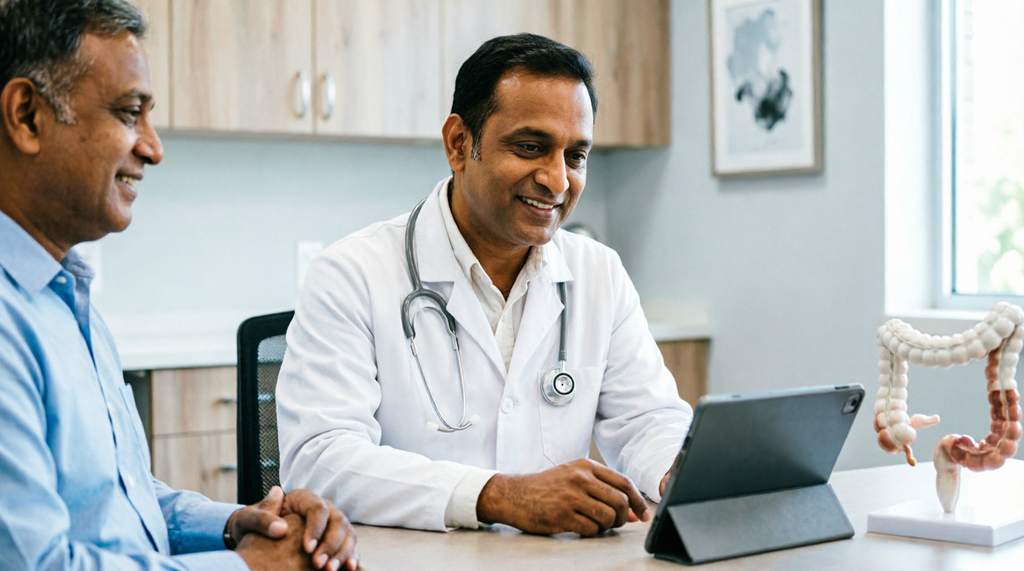
You will check in, change into a hospital gown and meet the team. A nurse places a small IV line in your arm to give fluids and sedation. The doctor reviews your history and answers your last questions.
During the Procedure and Sedation
You receive sedation, so most people feel relaxed or sleepy and remember little or nothing. You lie on your left side. The doctor gently guides the scope through the colon. They may add some air or carbon dioxide to open the bowel for a better view, which can cause mild bloating or cramping. If needed, the doctor removes polyps or takes biopsies through the scope.
How Long Does a Colonoscopy Take?
The procedure itself usually takes about 30 to 60 minutes. Plan for a few hours in total, because check-in, preparation and recovery add time.
Recovery and Aftercare
What Is Normal Afterwards?
You rest in a recovery area until the sedation wears off, usually within an hour or two. Most people go home the same day. Common effects include mild bloating or gas, light cramping that settles as you pass gas, and feeling sleepy for the rest of the day.
You can usually eat a light meal soon after. Do not drive, sign legal papers or make important decisions for 24 hours after sedation.
When to Call Your Doctor
Contact your doctor or the hospital right away if you have severe or worsening abdominal pain, a swollen, hard belly, fever or chills, heavy rectal bleeding or large blood clots, or persistent vomiting.
These problems are uncommon, but quick care matters.
Understanding Your Results
Your doctor usually shares the first findings once you wake up. Biopsy reports take a few days.
Normal result: No polyps or abnormal areas. You return for your next screening at the interval your doctor recommends.
Polyps found and removed: Most polyps are harmless, but some can turn cancerous over time. Removal lowers that risk, and your doctor will set a follow-up schedule.
Other findings: Inflammation, ulcers, bleeding points or growths need further tests or treatment. Your gastroenterologist will explain the next steps clearly.
Is a Colonoscopy Safe?
Colonoscopy is a safe, well-established procedure when a trained specialist performs it. Serious complications, such as bleeding after polyp removal or a tear in the bowel wall, are rare. Your team checks your health history, monitors you throughout and acts quickly if anything changes. The benefit of finding and removing precancerous polyps far outweighs the small risks for most people.
Colonoscopy in Padur, OMR, Chennai: Why Choose Supreme Speciality Hospitals?
If you are searching for a colonoscopy test in OMR, Chennai, Supreme Speciality Hospitals offers a complete digestive care service close to home. People from Padur, Navalur, Kelambakkam and Sholinganallur reach us easily along the OMR corridor.
Here is what you can expect from our Department of Medical Gastroenterology.
Our team includes an experienced gastroenterologist who explains every step before and after the test. Patients receive clear, written preparation instructions that suit their health and routine, along with safe sedation and continuous monitoring. Same-day polyp removal and biopsy are possible when needed. The department also supports related concerns, including liver disease and other digestive conditions.
Whether you need colon cancer screening in Chennai or a test for ongoing symptoms, our team will guide you from your first consultation to your results.
Frequently Asked Questions
How long does a colonoscopy take?
The procedure usually takes 30 to 60 minutes. With preparation and recovery, plan for a few hours at the hospital.
Is a colonoscopy painful?
Most people feel little or no pain because of sedation. You may have mild bloating or cramps afterwards, which pass quickly.
What can I eat the day before a colonoscopy?
Stick to clear liquids such as water, strained soup, coconut water, clear juice without pulp, and black tea or coffee. Avoid red or purple drinks and all solid food, unless your doctor says otherwise.
At what age should I get a colonoscopy?
Adults at average risk should usually start colon cancer screening at 45. Start earlier if you have symptoms, a family history of colon cancer, or a condition such as inflammatory bowel disease.
Can I drive after a colonoscopy?
No. Sedation can affect your judgement and reflexes for up to 24 hours, so arrange for someone to take you home.
How long does bowel preparation take to work?
The cleansing solution often starts working within one to three hours, and you may need the toilet frequently for several hours.
Is a colonoscopy safe if I have diabetes or heart disease?
In most cases, yes, with some planning. Tell your doctor about your conditions and medicines so they can adjust your prep and sedation safely.
Where can I get a colonoscopy test in OMR, Chennai?
You can book a colonoscopy at Supreme Speciality Hospitals in Padur, on the OMR stretch of Chennai.
Conclusion
A colonoscopy is one of the most effective ways to prevent colon cancer, because doctors can find and remove polyps before they become a problem. Most of the effort lies in the preparation. If you follow a low-fibre diet, drink only clear liquids the day before, and take your cleansing solution as directed, you give your doctor the clearest view and help avoid a repeat test. The procedure itself is usually short, and most people go home the same day.
Do not let worry or delay stand between you and early detection, especially if you are over 45, have a family history of colon cancer, or notice blood in your stool, ongoing constipation or unexplained weight loss. At the Department of Medical Gastroenterology, Supreme Speciality Hospitals in Padur, Chennai, our specialists guide you from preparation to recovery. Book your colonoscopy appointment today.
About the Author
Dr. Arun Kasiviswanathan, MBBS, MS, MCh Gastroenterology Medical Leadership, Supreme Speciality Hospitals, Padur, Chennai
Dr. Arun Kasiviswanathan is a gastroenterology specialist at Supreme Speciality Hospitals, where he is part of the medical leadership team. His clinical work focuses on endoscopy and colonoscopy, including screening and diagnosis of colon and digestive conditions, and on the management of liver disease. He believes early detection saves lives and helps patients prepare with confidence. To meet him, book an appointment at Supreme Speciality Hospitals.
Medical Disclaimer
This article is for general information only and does not replace professional medical advice. Please consult your doctor before making decisions about your health or colonoscopy preparation. In an emergency, contact your nearest hospital immediately. To speak with a specialist, book an appointment at Supreme Speciality Hospitals.