



A stroke can happen without much warning. One moment, a person may be talking, walking, or carrying out their usual routine. Within minutes, they may develop sudden weakness, difficulty speaking, vision changes, or problems with balance.
Recognizing stroke symptoms early is important because stroke is a medical emergency. Getting urgent medical attention can help doctors determine the type of stroke and begin appropriate treatment as quickly as possible.
One of the easiest ways to remember the main stroke warning signs is the FAST test for stroke: Face, Arms, Speech, and Time.
What Is a Stroke?
A stroke occurs when blood flow to part of the brain is interrupted or when a blood vessel in the brain bleeds. Brain cells depend on a continuous supply of oxygen and nutrients, so reduced or interrupted blood flow can cause brain injury.
There are different types of stroke. An ischemic stroke occurs when a blood clot blocks blood flow to part of the brain. A hemorrhagic stroke occurs when a blood vessel breaks and causes bleeding in or around the brain.
The symptoms can vary depending on which part of the brain is affected. However, many strokes cause sudden changes in movement, speech, vision, balance, or sensation.
Common Stroke Symptoms to Watch For
Stroke symptoms usually appear suddenly. Knowing the early symptoms of stroke can help you recognize a potential emergency.
Common signs include:
- Sudden numbness or weakness of the face, arm, or leg, particularly on one side of the body
- Difficulty speaking or understanding speech
- Slurred speech or unusual difficulty finding words
- Sudden vision problems in one or both eyes
- Loss of balance, dizziness, or difficulty walking
- A sudden, severe headache without an obvious cause
Not everyone will experience all these symptoms. Even one sudden symptom can require immediate medical assessment.
Remember FAST: The Simple Stroke Test
The stroke symptoms FAST approach is a simple way to recognize some of the most important signs of stroke.
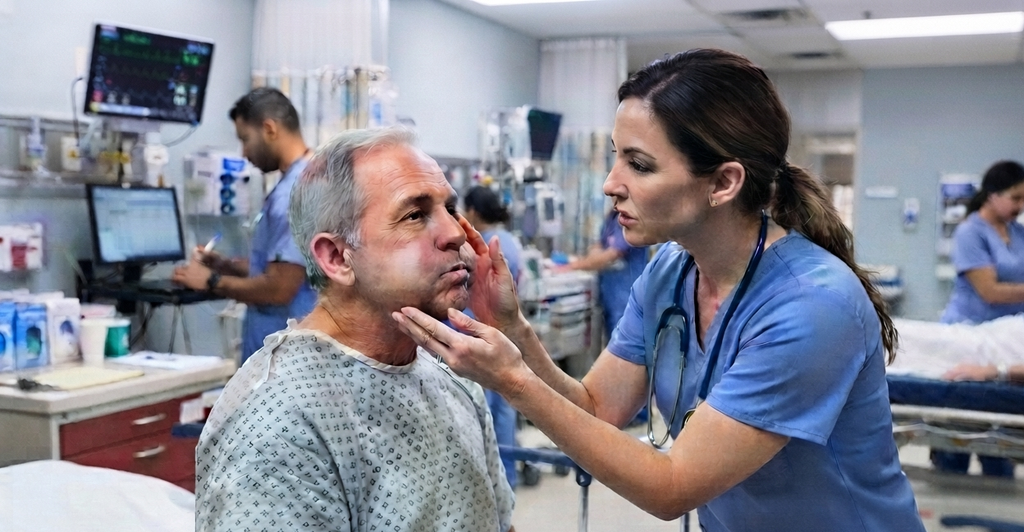
F – Facial Drooping
Ask the person to smile. Check whether one side of the face appears to droop or whether the smile looks uneven.
Facial drooping can be an important warning sign of stroke.
A – Arm Weakness
Ask the person to raise both arms. If one arm drifts downward or the person cannot raise one arm normally, this may indicate weakness caused by a stroke.
S – Speech Difficulty
Ask the person to repeat a simple sentence. Listen for slurred speech, unusual difficulty speaking, or trouble understanding what is being said.
T – Time to Act
If any of these signs are present, time matters. Seek emergency medical care immediately rather than waiting to see whether the symptoms improve.
Other Signs of Stroke You Should Not Ignore
FAST focuses on several major symptoms, but stroke can also cause other sudden changes.
Sudden vision problems may include blurred or lost vision in one or both eyes. Some people may also experience double vision.
Loss of balance or sudden dizziness can make it difficult to stand or walk normally.
A severe headache that develops suddenly, especially when accompanied by other neurological symptoms, also needs urgent medical evaluation.
These sudden stroke symptoms can occur independently or together.
Stroke Symptoms in Women and Men
Stroke symptoms in women and men can include the same classic warning signs, such as facial drooping, arm weakness, speech difficulties, sudden numbness, and vision problems.
However, women may sometimes experience additional or less typical symptoms, such as:
- Sudden confusion
- Nausea or vomiting
- General weakness
- Shortness of breath
- Loss of consciousness
These symptoms can have many possible causes, so they should not automatically be assumed to indicate a stroke. However, when symptoms develop suddenly, urgent medical evaluation is important.
What Are Minor Stroke Symptoms?
The term “minor stroke” is often used when symptoms are relatively mild or temporary. However, mild symptoms should not be dismissed.
A transient ischemic attack (TIA) can produce stroke-like symptoms that resolve after a short period. Although the symptoms may disappear, a TIA can be a warning of a possible future stroke.
For this reason, sudden numbness, temporary difficulty speaking, temporary vision problems, or brief weakness should still be medically assessed.
Ischemic Stroke Symptoms
Ischemic stroke symptoms can include:
- Sudden weakness or numbness, especially on one side
- Facial drooping
- Difficulty speaking or understanding speech
- Sudden vision changes
- Dizziness or loss of balance
- Difficulty walking
The symptoms depend on the area of the brain affected and the extent of the interruption in blood flow.
Doctors need to determine whether a stroke is ischemic or hemorrhagic because treatment depends on the type of stroke. This is one reason why urgent hospital evaluation is essential.
How to Recognize a Stroke and What to Do
If you notice possible signs of stroke, do not wait for the symptoms to disappear.
Remember these simple steps:
- Recognize the symptoms: Look for facial drooping, arm weakness, speech difficulty, sudden numbness, vision changes, or balance problems.
- Act quickly: Seek emergency medical care immediately.
- Note when symptoms started: The time when the person was last known to be well can be important for medical decision-making.
- Do not delay: Avoid waiting for the person to “feel better” before seeking help.
Early medical assessment allows healthcare professionals to identify the cause of the symptoms and determine appropriate treatment.
Getting Neurological Care for Stroke Symptoms
Stroke requires coordinated medical care, particularly when symptoms develop suddenly. Neurological assessment can help determine what part of the brain may be affected and what investigations or treatment are needed.
For neurological conditions and stroke-related concerns, you can learn more about the Radiology Department at Supreme Hospitals.
General health conditions can also influence a person’s risk of vascular problems. The General Medicine Department at Supreme Hospitals provides medical evaluation and management for a range of health concerns.
For people looking for stroke treatment in Chennai, stroke treatment in OMR, or brain stroke treatment in Chennai, choosing a hospital equipped to provide timely emergency and neurological care is important.
When Should You Seek Emergency Care?
Any sudden neurological change should be taken seriously. This includes sudden weakness, facial drooping, difficulty speaking, sudden vision problems, loss of balance, or an unexplained severe headache.
If you suspect a stroke, seek emergency medical attention immediately. Do not drive the affected person yourself if emergency medical transport is available.
For people searching for a stroke hospital in Chennai, stroke hospital in OMR, stroke emergency treatment in Chennai, or stroke treatment in Kelambakkam, the priority should always be getting appropriate medical evaluation without unnecessary delay.
Frequently Asked Questions
1. What are the most common stroke symptoms?
Common stroke symptoms include sudden facial drooping, weakness or numbness on one side of the body, difficulty speaking, slurred speech, sudden vision problems, dizziness, and loss of balance.
2. What is the FAST test for stroke?
FAST stands for Face, Arms, Speech, and Time. It helps identify facial drooping, arm weakness, and speech difficulties and reminds you to act quickly when these symptoms appear.
3. Can stroke symptoms go away on their own?
Yes, stroke-like symptoms can sometimes disappear, particularly with a transient ischemic attack (TIA). However, temporary symptoms still require urgent medical evaluation because they may signal a risk of stroke.
4. Are stroke symptoms different in women and men?
The main stroke symptoms in women and men are often similar. Women may also experience symptoms such as sudden confusion, nausea, vomiting, general weakness, or shortness of breath.
5. What should I do if I notice sudden stroke symptoms?
Treat sudden stroke symptoms as a medical emergency. Seek immediate medical attention and note the time the symptoms began or when the person was last known to be well.
Conclusion
Knowing how to recognize a stroke can make a critical difference. Facial drooping, sudden numbness or weakness, slurred speech, difficulty speaking, vision problems, loss of balance, and sudden severe headache should never be ignored.
Remember FAST: Face, Arms, Speech, Time. When stroke symptoms appear suddenly, acting quickly is essential.